Media · 5 min read
World Content Market: domestic production grows, and partnerships with Chinese companies
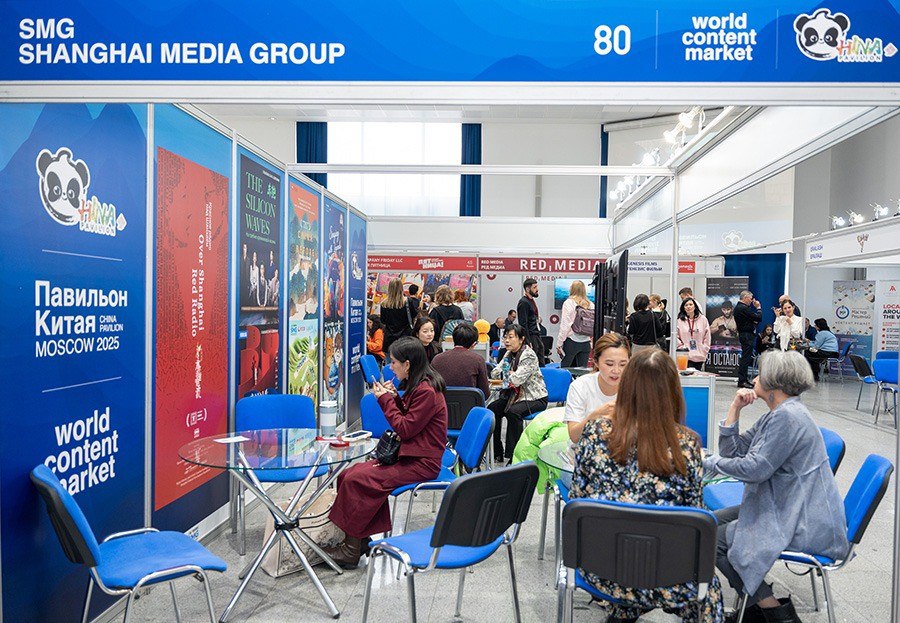
World Content Market 2025, an international market for television and digital content, took place in Moscow. It brought together about 1,500 delegates from more than 500 companies in Russia, Belarus, Kazakhstan, Armenia, Uzbekistan, Azerbaijan, Turkey, the Middle East, and Asia.
During the market, companies from different countries talked about where the television and film business stands now. They signed deals on distribution, licensing, production, and adapting formats. Monetizing digital content, copyright protection, and other questions were part of the same conversations.
"Our business program was devoted to the main trends in the audiovisual sector in Russia and the CIS, and to cooperation with companies from friendly countries," said Elena Sanbim, director of WCM, describing the idea of the event.
This year the China pavilion drew particular attention. It was organized with support from China's National Radio and Television Administration (NRTA) and the media group SMG (Shanghai Media Group).
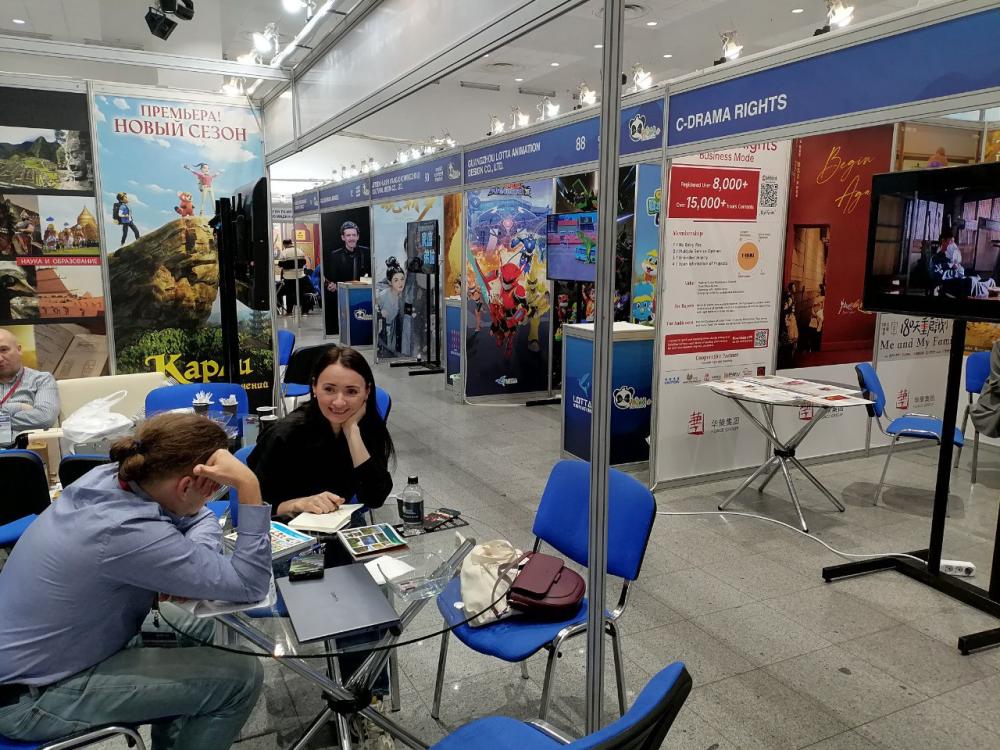
Twenty-four Chinese companies took part, among them Beijing Filmtag Technology Development, Blue Fox Pictures, China Huace Film & TV, China International TV Corporation, Punchline Entertainment, and Dagen Culture. Chinese and Russian companies signed media cooperation agreements.
Turkey was also on the floor, including the channels ATV and Kanal D and the distributors Global Agency, Mistco, Ogm Universe, Raya Group Distribution, and The Mediahub.
India stood out among the other countries. Content suppliers came from there as well, including Zee Entertainment Enterprises Limited, Ultra Media and Entertainment, and One Life Studios.
Many Russian television companies and holdings took part, among them VGTRK, Channel One Worldwide Network, GPM RTV, CTC Media, NTV, TNT-Teleset, Moscow Media, and the channels TV Center, Pyatnitsa, and Subbota.
WCM also worked as a business-to-business floor for Russian OTT platforms, including Ivi, Okko, Wink, Premier, Kion, Start, Kinopoisk, and Amediateka.
Conferences covered production, distribution, and monetization.
The Association of Animated Film held a pitch session, "Animation projects from Russia and China." Russian and Chinese animation companies presented films and series that are in production or ready for distribution, and they talked about working together.
A panel called "Global South content in Russia: practical experience localizing and launching projects from Iran and India" took up cases of adapting Iranian and Indian content for Russian television and cinemas.
Another panel drew a strong response: "Support for producing and distributing content for children and teenagers in Russia: what is possible, and what next? How to improve children's content and produce more of it." Speakers included Ekaterina Cherkes-Zade, director of the center for the creative economy at the Agency for Strategic Initiatives; Irina Mastusova, a member of the public council at the Ministry of Culture; Anna Terekhova, deputy director of the cinematography and digital development department at the Ministry of Culture; and other people from the industry.
How participants judged the market
Anton Manaenkov, lead manager for advertising, sponsorship, and original-program sales at Red Media: "We come to WCM every time. The event is a way to keep up with what is new on the Russian content market. This year the organizers changed the venue and the format, and in my view the event gained from that."
Stepan Kovalev, general director of Time Media Group: "For us, WCM in Moscow is a chance to meet and talk with Russian partners. We mostly meet foreign companies at markets abroad. And yes, there are new agreements. Fairly soon, series from our catalog will be on the air of several pay-TV channels. Users of online cinemas will also get 2025 productions."
"For some time now WCM has been a place for talking with partners we already have, not for finding new companies. That is both its strength and, clearly, its weakness. For the exhibition to grow, it needs more participating companies. One way to get there is to combine this market with other related industry events on a single floor."
Anna Kremenetskaya, general director of Master Resheniy, a founder and a board member of the National Association of Broadcasters: "The number of participants from the regions went down, but the search for new content became more active. Events like this matter: in a day you can hold dozens of meetings, see the trends, and compare notes."
Denis Ovsyannikov, chief consultant on artificial intelligence at Sinterra Media: "A content market is always useful. I would like to see Russian content expand into other countries, the way Chinese content does. Chinese content is here as a large cluster."
Alexander Rusinov, head of TV products at EPG Service: "This is not my first year at WCM, so I know it is useful from a business point of view. Conversation produces new thoughts and ideas. We may even release new products out of that kind of dialogue."
Ekaterina Yakushenko, sales director at MKT Media: "On the whole, World Content Market is a useful event. It is good that this floor exists. WCM is held not only in Moscow but also in Kazakhstan, which adds ways to stay in touch. For Moscow it is one of the main places where you can present nonlinear content."
Trends and the outlook for Russian content
Anton Manaenkov: "Content about Russia was widely shown: its people, its multinational culture, its history, and its traditions. Also travel across the country. In April we launched the nationwide cultural and geographic contest TOCHKA.RF. The aim is a cultural and geographic map of Russia, with the most important points marked by ordinary people who love their region."
Stepan Kovalev: "The main trend in what people watch is domestic content. Film, series, animation: it does not matter which. The same tendency shows up with cinema audiences, with television viewers, and with users of online cinemas. It will obviously continue for some time, and it may last a long time."
Anna Kremenetskaya: "Our partners are state channels that mostly carry regional news, so they bet on the state agenda and on patriotic content. Viewers also want entertainment. Demand is growing for nostalgic projects: older films, concerts by legendary performers. Series about the Soviet era are a separate trend. To vary the schedule we also bring in production from regional channels, choosing the strongest entertainment and educational programs."
Denis Ovsyannikov: "In production, including documentary and entertainment, Russia has taken a step forward. Something like a Russian version of Bollywood has appeared. Strong series run on OTT platforms and on television. The Internet Development Institute helps."
Alexander Rusinov: "The amount and the quality of original content from domestic players is genuinely good to see. Many people find a worthy substitute for Netflix and Apple TV in Kinopoisk, Okko, Start, and other services."
Ekaterina Yakushenko: "I think today's picture will hold for the near term. A year, two. First, rights are not sold for a short term. Second, people, subscribers, and viewers have only just acquired a taste for the new viewing trends."
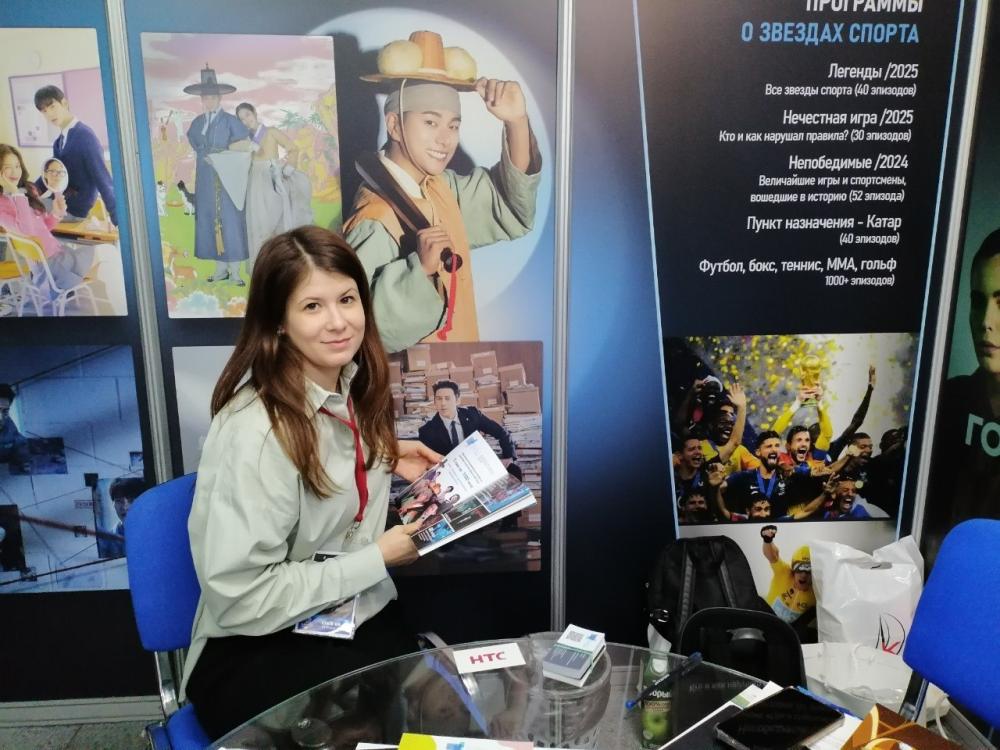
A report from World Content Market 2025 in Moscow.